
Roof ventilation. The system your shingles depend on.
Without balanced airflow, your attic hits 140°F+ in summer and your shingles fail a decade early. We design ridge-and-soffit ventilation systems that meet California code, restore manufacturer warranty coverage, and cut cooling bills 8–15%. Free estimate with NFA calculation.
The four ventilation systems for Central Valley roofs.
Every roof shape and attic geometry calls for a different combination. We design the system after measuring your existing NFA, not before.
Ridge Vents
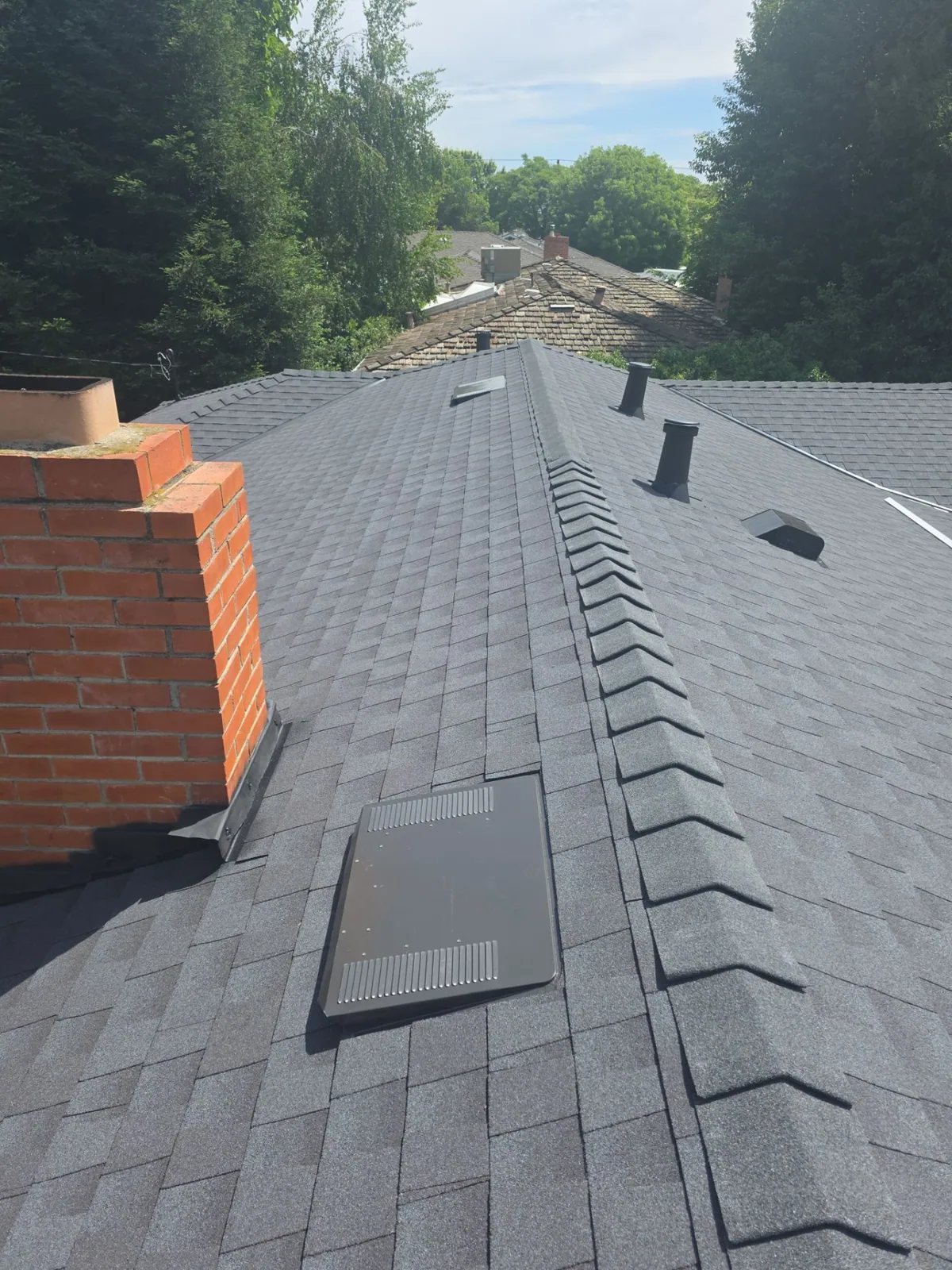
Run the full length of the roof peak. Hot air exits naturally through 18 sq inches of NFA per linear foot. The most efficient passive system. Best for ridge lines longer than 12 feet. Code-compliant for almost every shingle roof in California.
Soffit Vents
The other half of balanced ventilation. Continuous vinyl or aluminum strips under the eaves bring cool replacement air in. Without adequate intake, your ridge vent does nothing. We retrofit these where they’re missing or undersized.
Powered Attic Fans
Active ventilation with a thermostat-controlled motor. Best for short ridge lines (under 12 feet) where ridge vent NFA can’t meet code on its own. Solar-powered options eliminate the electrical run. Requires balanced soffit intake to avoid depressurizing the attic.
Static Box & Turbine Vents
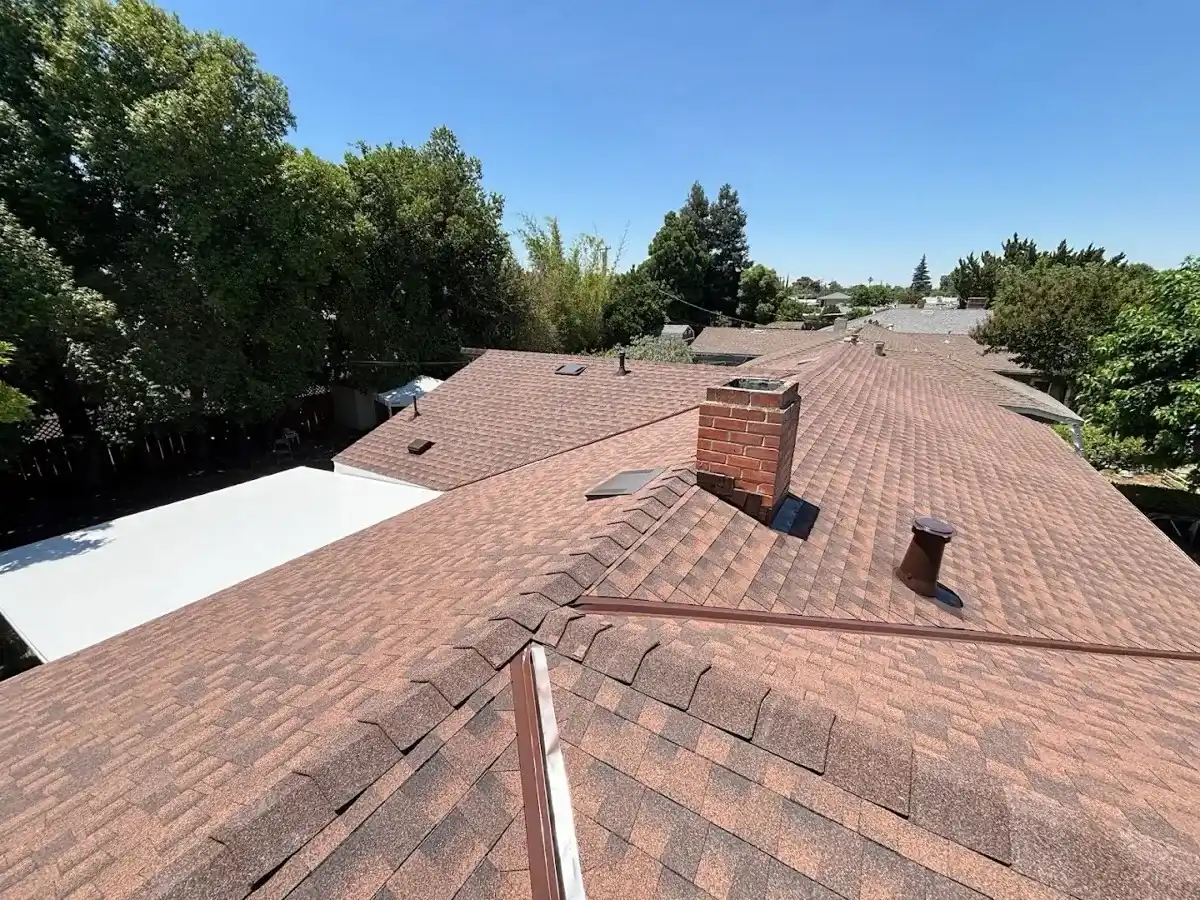
For hip-only roofs without a continuous ridge. Box vents (passive) are common on stick-built homes. Turbines spin in the wind for active exhaust. Less efficient than ridge vent but the right tool when geometry rules out anything else.
Ventilation works best when paired with the roof.
The cleanest install path runs ventilation alongside your reroof. Three concrete reasons.
Cut the Ridge Once
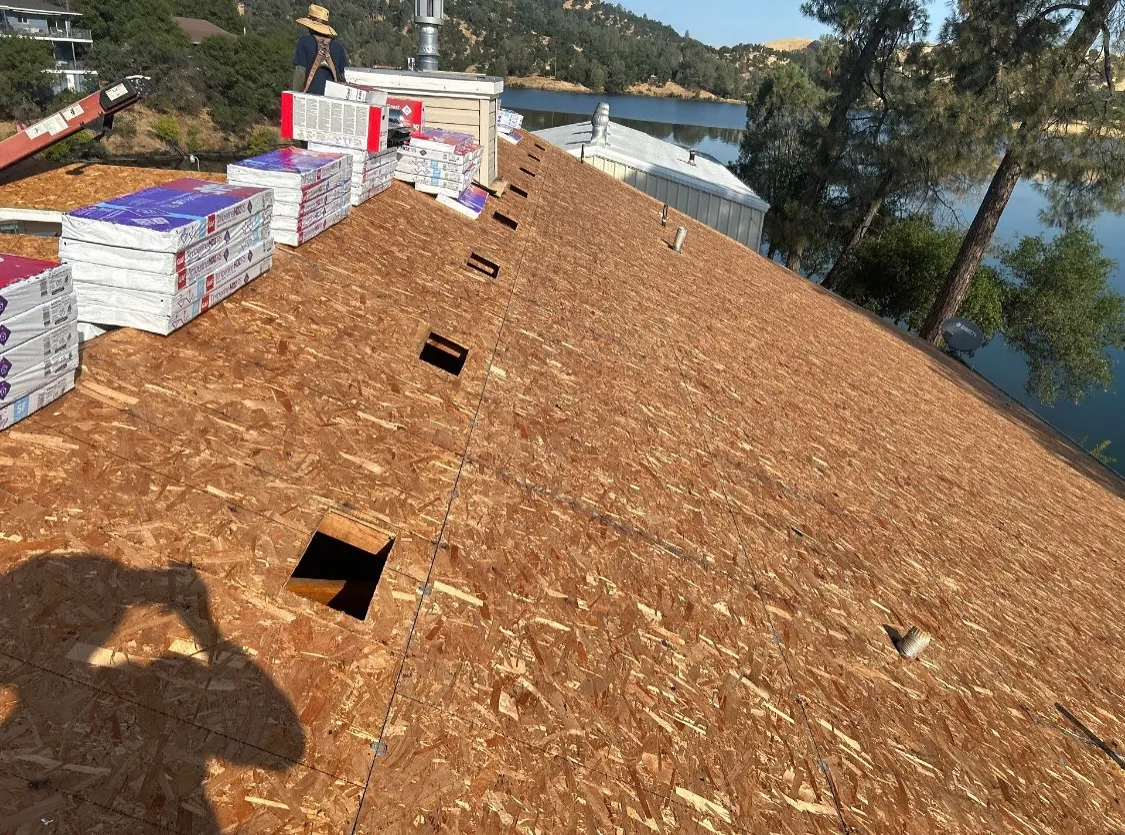
Installing ridge vent on an existing roof means cutting into the finished shingles — risky, and often voids the warranty. During a reroof, the ridge is already exposed. We cut, install the vent, and shingle over it as one operation.
Restore Manufacturer Warranty
Owens Corning, GAF, and CertainTeed all require minimum ventilation for warranty registration. If your attic is undersized, your new roof won’t qualify for the Platinum / Golden Pledge / 5-Star tier. We fix this during install, not after.
Cost Savings
Combining ventilation with a reroof saves 15–25% versus running them as separate projects. One mobilization. One permit. One pass through the attic. Zero coordination headaches.
Vents on real Econo roofs.
Real Econo jobs — not stock photos.
Roof ventilation, asked & answered.
How do I know my attic ventilation is inadequate?
The signs are usually obvious once you know what to look for. In summer, attic temperatures of 140°F+ when outside is 100°F mean poor airflow. In winter, ice dams or condensation on the underside of the roof deck point to trapped moisture. Year-round, hot upstairs rooms even with the AC running and premature shingle wear (curling, granule loss before year 15) both signal a ventilation problem. We measure NFA (net free area) during every inspection.
What's the difference between ridge vents and powered attic fans?
Ridge vents are passive — they use natural convection to let hot air escape at the highest point of the roof. Soffit vents at the eaves pull cool replacement air in. This balanced system runs without electricity, never breaks, and meets all California Title 24 ventilation requirements. Powered attic fans are active — they use a motor to pull air out faster, but they need electricity, eventually fail, and can actually depressurize the attic if soffit intake is inadequate. For Central Valley homes, balanced passive ventilation is almost always the better choice.
How much does roof ventilation installation cost?
Ridge vent installation on a typical 1,500 sq ft Central Valley home runs $600 to $1,800 depending on roof length and complexity. Soffit vent retrofits (cutting in new intake vents where none exist) add $400 to $1,200. A complete balanced-ventilation upgrade — ridge + soffit + baffles — averages $1,500 to $3,500. We provide free estimates with NFA calculations and flat-rate pricing before any work starts.
Does adding ventilation reduce my cooling bill?
Yes — usually 8 to 15% on the cooling portion of your summer bill. Properly ventilated attics run 20 to 40°F cooler than under-ventilated ones during 105°F+ Central Valley afternoons. That heat would otherwise radiate down through the ceiling into your living space, forcing your AC to work harder. The savings are biggest on homes built before 1990 (smaller original vents) and homes with darker roofing materials.
Should I add ventilation when I replace my roof?
Yes — a roof replacement is the only time you can install ridge vents without cutting into a finished roof. We measure your attic's existing NFA during the inspection and design the new ventilation system around the new roof. Combining the work saves 15 to 25% versus a separate ventilation project later. It also keeps your manufacturer warranty intact — Owens Corning, GAF, and CertainTeed all require minimum ventilation for warranty coverage.
Is roof ventilation required by California code?
Yes. California Building Code Section 1203.2 requires 1 sq ft of net free ventilation area per 150 sq ft of attic floor (1:150), or 1:300 with a vapor barrier. Title 24 energy code adds further requirements for cool-roof attics. We design every system to meet or exceed code, and we provide the NFA calculation documentation your inspector will ask for.
Can I retrofit ventilation without replacing my roof?
Often, yes — but it depends on your roof type. Asphalt shingle roofs accept ridge vent retrofits if the ridge is at least 4 inches wide and not interrupted by hips or valleys. Tile roofs are harder because cutting into the underlayment risks leaks. Soffit vents can almost always be added without touching the roof. We assess your specific roof during a free estimate and recommend the most cost-effective approach.
How long does a ventilation install take?
Standalone ridge vent on a typical home: 4 to 6 hours, single day. Adding soffit vents: another 3 to 5 hours. Full balanced-ventilation upgrade including baffles and air sealing: 1 to 2 days. We complete most ventilation-only projects in one day and never leave a roof open overnight.
Why this work matters to us.
Roofing is more than a transaction. The roof you install on a Central Valley home protects your family for decades. Wrong materials, wrong methods, or wrong crew, and you’re replacing it again in 12 years instead of 30. Right materials, right methods, and a properly trained crew, and your roof outlasts the mortgage. The difference is install detail, manufacturer-grade materials, and the certifications that hold contractors accountable.
Mario Espindola founded Econo Roofing in 1996. Three decades later, we’ve grown to a 20-person team serving the Central Valley. The operating principle hasn’t changed. Do the work right the first time. Document everything with photos. Stand behind the install with a written workmanship warranty. Register every manufacturer warranty within 30 days of completion. Treat every customer like they’re a neighbor — because in the Central Valley, most of them actually are.
Our credentials are earned, not bought. Econo Roofing is the only locally based, quad-certified contractor based in Stanislaus and Merced Counties. We’re also GAF Master Elite (about 2% of roofers, per GAF), CertainTeed Select ShingleMaster (top 1% of the roofing profession, per CertainTeed), and GAF Gold Elite. No other roofing contractor based in Stanislaus and Merced Counties holds all four credentials simultaneously. Each manufacturer audits our installs to maintain certification, which means we can’t cut corners on material grade, install method, or finish quality. The audits keep us honest on every project.
License #749551, verifiable at CSLB.ca.gov. We carry $1 million general liability insurance, full workers comp coverage, and a $25,000 CSLB contractor bond. Family-owned and operated. (209) 668-6222 reaches our team for free written estimates across the Central Valley cities we serve in Stanislaus and Merced counties.

More on attic airflow.
- GuideA Homeowner’s Guide to Roof Ventilation in Merced & the Central Valley
- CodeCalifornia Title 24 Cool Roof & Ventilation Requirements
- Pairs withAttic Insulation Services
- ServiceRoof Replacement
Services that work with this one.
- Roof ReplacementBest time to install ridge vent is during re-roof.
- Roof CoatingCool-roof coating plus proper ventilation maximizes summer savings.
- Attic InsulationInsulation and ventilation work together — one without the other costs you money.
- Roof MaintenanceRegular inspections catch blocked vents before shingles fail.
Ready to fix your attic airflow?
Free estimate with NFA calculation and flat-rate quote. No obligation.
Talk to Mario’s team in 30 seconds. No pressure, no obligation. Free written estimate. Priority response for active leaks.
Open 9am–5pm Mon–Fri, 9am–12pm Sat.
Or call (209) 668-6222 · License #749551 · OC Platinum Preferred · Schedule a Ventilation Assessment